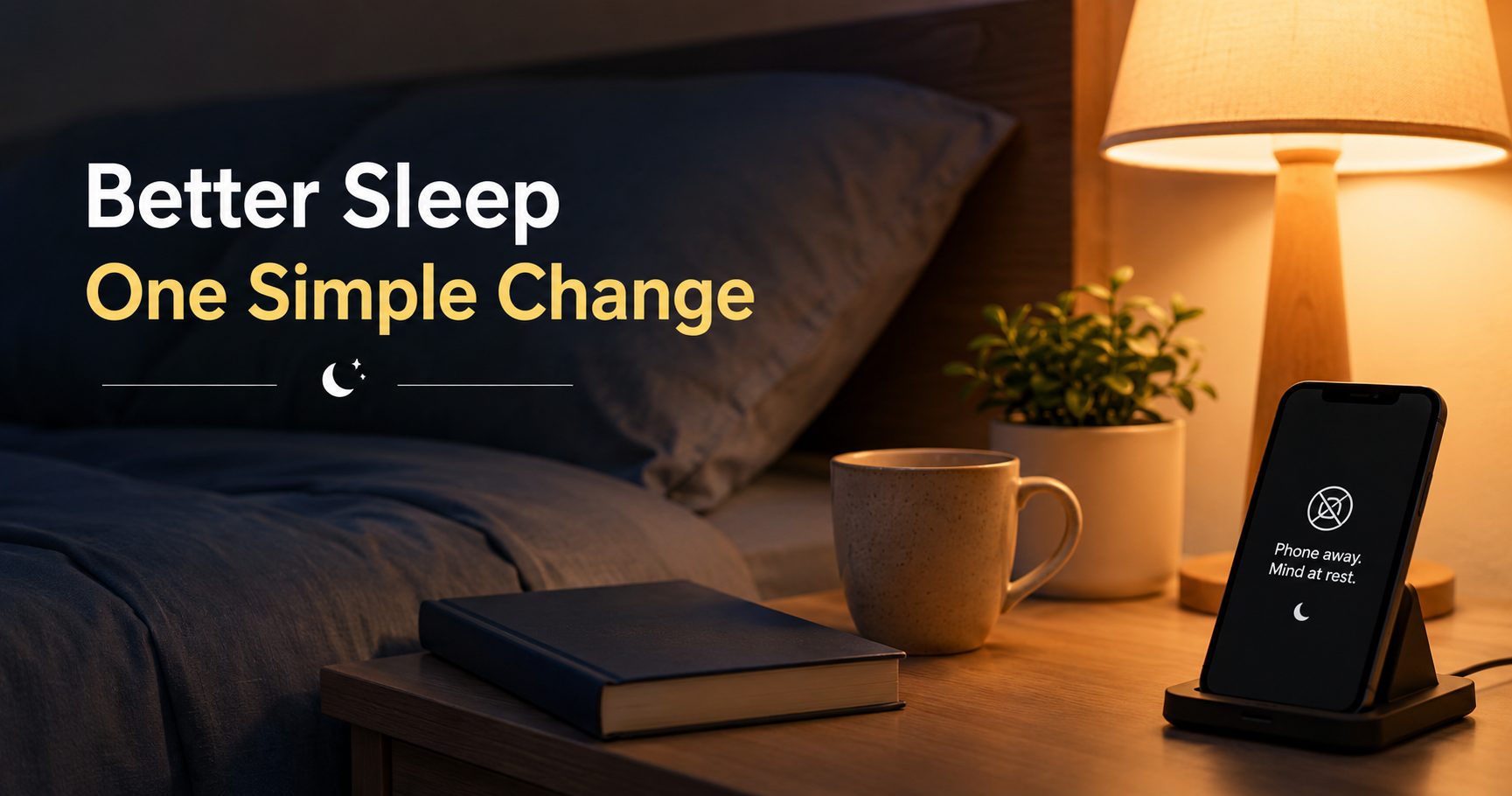
For a long time, I thought my sleep problem was complicated.
I blamed stress. I blamed caffeine. I blamed my workload, my mattress, the weather, random thoughts, and sometimes even the moon. But deep down, I knew there was one habit I kept ignoring: I was using my phone right up until the moment I tried to sleep.
Not just checking one message. Not just setting an alarm. I mean scrolling, watching videos, reading comments, replying to messages, checking notifications, and convincing myself that five more minutes would help me “relax.”
It never did.
So I decided to try one simple change for one week: no phone use 45 minutes before bed.
No dramatic sleep routine. No expensive gadgets. No complicated productivity system. Just putting my phone away 45 minutes before I planned to sleep.
I did not expect much. But by the end of the week, I was surprised by how different my nights felt.
The One Change I Made
My rule was simple:
At 10:45 p.m., my phone had to go away. My target bedtime was 11:30 p.m.
I charged my phone across the room instead of beside my bed. I set my alarm before the 45-minute window started. After that, I was allowed to do anything calm that did not involve a screen.
I could read a few pages of a book, tidy my desk, stretch lightly, write down tomorrow’s tasks, or just sit quietly.
At first, it sounded almost too simple. But that was the point. I wanted a change I could actually follow.
Day 1: The Withdrawal Was Real
The first night was uncomfortable.
I did not realize how automatic my phone habit had become until I removed it. My hand kept reaching for it even though it was across the room. I felt like I was missing something important, even though nothing important was happening.
The silence felt strange.
I tried reading, but my mind kept jumping around. I wanted quick entertainment. I wanted stimulation. I wanted the easy comfort of scrolling.
I did fall asleep eventually, but not instantly. The biggest win was not better sleep that night. The win was proving I could actually stay away from my phone for 45 minutes.
Day 2: My Brain Started Looking for Replacements
On the second night, I prepared better.
Before putting my phone away, I wrote down three things I needed to do the next day. This helped because one of my biggest bedtime problems was mental noise. The moment I tried to sleep, my brain suddenly remembered every unfinished task in my life.
Writing things down made my mind feel less responsible for holding everything.
I still wanted my phone, but the craving was weaker than Day 1. I read for about 15 minutes, then turned off the light.
Sleep came a little easier.
Day 3: I Noticed My Evenings Felt Longer
By the third night, something interesting happened. My evening felt longer.
Usually, I would lose 45 minutes without noticing. I would open one app, then another, then another. Suddenly it would be midnight and I would feel annoyed with myself.
Without my phone, those 45 minutes felt real.
I used the time to clean my room a little, prepare clothes for the next day, and drink water. Nothing special, but it made the next morning smoother.
That night, I fell asleep faster than usual. I also woke up feeling less heavy.
Day 4: The Adjustment Period Hit Again
Day 4 was not perfect.
I had a stressful day, and my first instinct was to escape into my phone. I wanted distraction. I wanted to scroll until I forgot about everything.
This was the night I almost broke the rule.
Instead, I made a compromise with myself: I could write down what was bothering me, but I could not pick up the phone.
That helped. Not completely, but enough.
This taught me something important. My phone was not just entertainment. It was also my emotional escape button. Removing it meant I had to actually sit with my thoughts for a while.
That part was uncomfortable, but also useful.
Day 5: Sleep Started Feeling More Natural
By Day 5, the routine started feeling less forced.
I set my alarm, plugged in my phone across the room, and stopped thinking about it so much. My body seemed to understand that the day was ending.
This was the first night I felt genuinely sleepy before getting into bed.
That was new for me. Usually, I would get into bed mentally awake, then try to force sleep. But without the bright screen, fast content, and constant notifications, my mind slowed down earlier.
I slept well that night.
Day 6: I Woke Up Before My Alarm
On Day 6, I woke up a few minutes before my alarm.
That does not happen often for me.
I am not saying one phone rule magically fixed everything. But I did feel more rested. My morning felt calmer because I was not waking up after a night of overstimulation.
I also noticed I was not starting the day with guilt. Usually, when I stayed on my phone too late, I woke up already feeling like I had failed myself a little.
This time, I woke up feeling like I had kept a promise.
Day 7: The Habit Felt Worth Keeping
By the final night of the first week, I knew I wanted to continue.
The biggest change was not that I slept perfectly every night. I did not. Some nights were still restless. Some thoughts still showed up. Some mornings were still slow.
But my sleep quality improved because my bedtime became calmer.
I was no longer throwing my brain from bright videos and endless information straight into darkness and expecting it to shut down instantly.
That expectation now feels unfair.
Why This Works, in Plain English
The science behind this is actually simple.
Your brain needs signals that it is time to sleep. Darkness, quiet, routine, and lower stimulation all help send that message.
Phone use can interfere with that in a few ways.
First, the screen light can make your brain feel more awake. Second, the content keeps your mind active. Even if you are watching something “relaxing,” your brain is still processing images, sounds, emotions, and information.
Third, phones create tiny loops of anticipation. A new message, a new video, a new notification, a new post. Your brain keeps waiting for the next thing.
Sleep needs the opposite. It needs fewer signals, not more.
Stopping phone use 45 minutes before bed gave my brain a buffer zone. It created a small bridge between the busyness of the day and the quiet of sleep.
What Changed Most
The biggest improvement was not just falling asleep faster. It was feeling less mentally crowded at night.
I had fewer random thoughts. I felt less restless. My mornings felt lighter. I also felt more in control of my routine.
The change was simple, but not always easy. The first few nights required effort. I had to deal with boredom, stress, and the habit of reaching for my phone.
But after a week, the benefits felt bigger than the discomfort.
My Sleep Improvement Score
I would give this experiment an 8.5 out of 10.
It did not make every night perfect, but it made my sleep noticeably better. More importantly, it gave me a routine I could actually maintain.
No expensive products. No complicated rules. Just 45 phone-free minutes before bed.
3 Tips You Can Try Tonight
- Charge your phone away from your bed.
If your phone is beside you, checking it is too easy. Put it across the room or outside the bedroom if possible. - Create a simple replacement habit.
Do not just remove your phone. Replace it with something calm, like reading, stretching, journaling, or preparing for tomorrow. - Start with 20 minutes if 45 feels too hard.
The goal is progress, not perfection. Once 20 minutes feels normal, increase it gradually.
If you have ongoing sleep problems, frequent insomnia, or sleep issues that affect your daily life, it is best to consult a doctor or qualified health professional.
For me, the lesson was simple: better sleep did not start with doing more. It started with removing one thing that was keeping my brain awake.