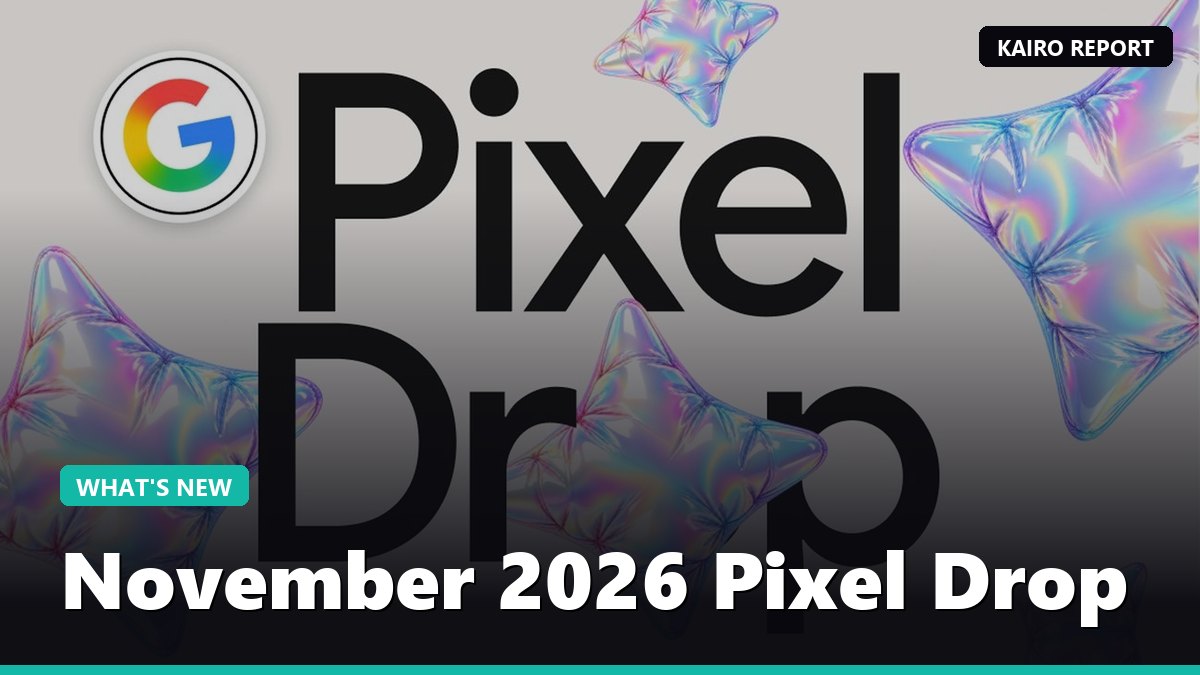

The November 2026 Pixel Drop started rolling out on November 10 and brings Gemini Intelligence to the Pixel 10 series, AI-built home screen widgets, a smarter Call Screen for the Pixel 11 and new icon styles and search for phones as old as the Pixel 6a. As usual, Google is staging the release, so it may take days or weeks to reach your phone.
Key Takeaways
- Google began rolling out the November Pixel Drop on November 10, 2026, alongside Android 17 QPR2, according to Google and 9to5Google.
- Gemini Intelligence, including the Rambler voice-typing tool, comes to the Pixel 10, 10 Pro, 10 Pro XL and 10 Pro Fold (not the Pixel 10a) in select countries and languages.
- The upgraded Gemini-powered Call Screen is limited to the Pixel 11 series and to the U.S. at launch.
- Older phones from the Pixel 6a onward get custom icon styles, expanded Pixel search and the monthly update, which Droid-Life says includes more than 30 fixes.
- Google also launched the Pixel Tag tracker at $29.99, or $99.99 for a four-pack, on November 11.
When does the November 2026 Pixel Drop arrive?
Google’s announcement says updates began rolling out on November 10, 2026, and will continue over several weeks. Android Authority reports that the monthly system update reaches devices in phases over roughly a week, and that it lands on the Pixel 6a and newer. If you do not see it yet, go to Settings, then System, then Software updates, and check manually.
The timing is a little unusual. 9to5Google notes this drop arrived a month earlier than Google’s typical cadence and is tied to Android 17 QPR2, the second quarterly platform release for Android 17. Feature availability, however, is not the same as the system update. Some features flip on server-side later, so installing the update does not guarantee every new tool appears that day.
What’s new in the November Pixel Drop?
The headline is Gemini Intelligence on the Pixel 10 family. Google describes it as an umbrella for several features that need the Gemini app, a completed setup and a user aged 18 or older:
- Rambler: Voice typing that strips filler words such as “um” and tidies your dictated text.
- Multi-step tasks: Gemini can handle chores like grocery orders, ride requests, takeout and reservations inside supported apps. Google lists this in Japan, the UK and India at launch, so U.S. users should not expect it yet.
- Proactive suggestions: Contextual prompts, such as sharing your ETA or finding a dinner spot, appear based on what is on screen.
Beyond Gemini Intelligence, Google lists several other additions:
- Personalized widgets: Called Create My Widget in some coverage, this lets you describe a widget in plain language, such as a countdown to a game, and have AI build it. It works on the Pixel 10 and Pixel 11 lineups.
- Call Screen upgrade: On the Pixel 11 series, Gemini can screen calls conversationally with a live transcript. It is U.S.-only for now.
- HiLight for Google Messages: The Pixel 11 Pro models can now glow for messages from favorite contacts when the phone is face down.
- Custom icon styles: Android Authority counts 10 new styles, for 16 total, on the Pixel 6a and newer.
- Pixel search: The app drawer search bar can now find photos, emails, messages, calendar items and settings.
- Conversation summaries: These expand to German, French, Spanish, Italian, Hindi and Traditional Chinese on the Pixel 9, 10 and 11 (not the “a” models).
Pixel Watch owners get step-by-step workout routines on the Pixel Watch 3 and newer, though Google Health Coach routines require a paid Google Health Premium subscription. Google also says you will soon be able to unlock a Pixel Watch with a nearby ultra-wideband Pixel phone.
Which Pixel phones get which features?
Eligibility is the most confusing part of any Pixel Drop. The table below summarizes Google’s own device lists for the main features.
| Feature | Eligible devices | Region notes |
|---|---|---|
| Gemini Intelligence (Rambler, proactive suggestions) | Pixel 10, 10 Pro, 10 Pro XL, 10 Pro Fold and Pixel 11 series (not 10a) | Select countries and languages |
| Gemini multi-step tasks | Gemini Intelligence devices | Japan, UK, India |
| Personalized (AI) widgets | Pixel 10 and Pixel 11 lineups | Select markets |
| Gemini Call Screen upgrade | Pixel 11, 11 Pro, 11 Pro XL, 11 Pro Fold | U.S. only |
| HiLight for Google Messages | Pixel 11 Pro, 11 Pro XL, 11 Pro Fold | All markets |
| Conversation summaries (new languages) | Pixel 9, 10, 11 (not “a” models) | Six added languages |
| Custom icon styles, Pixel search | Pixel 6a and newer | All regions |
| Step-by-step workouts | Pixel Watch 3 and newer | Coach routines need Google Health Premium |
The pattern is clear. Google is reserving its newest AI tools for phones with its latest Tensor chips, while still sending design and search improvements to devices that are several years old. If you own a Pixel 6a, 7 or 8, you get a fresh coat of paint but not the Gemini features.
How much is the new Pixel Tag?
Alongside the software, Google launched Pixel Tag, its own Bluetooth item tracker. According to Google, it costs $29.99 for one or $99.99 for a four-pack, went on sale November 11, works with Android 9 and newer phones through the Find Hub network, and uses ultra-wideband for precise guidance on supported phones. Google says the battery lasts more than a year.
That pricing puts Pixel Tag in the same range as Apple’s AirTag and Samsung’s SmartTag line. The practical question for buyers is ecosystem: a Pixel Tag makes the most sense if your household already uses Android phones, since it relies on Google’s Find Hub rather than Apple’s Find My.
What did the November update fix?
The feature drop rides along with a regular monthly update. According to Android Authority, the build for most Pixels is CP4A.261105.040.A1, with separate builds for the Pixel 11 in the U.S. and Canada. Droid-Life counts more than 30 fixes in Google’s changelog.
Notable fixes include the keyboard sometimes failing to appear in search fields, a charging indicator showing without a charger, Bluetooth accessory reliability problems and notification shade glitches. Pixel 11 owners also get fixes for photos occasionally not saving and for background battery drain tied to sensor services. Older models, including the Pixel 6a and Pixel 7 series, get a fix for distorted ringtones during some VoIP calls.
Is the November Pixel Drop worth installing right away?
For most people, yes. Monthly Pixel updates bundle security patches with bug fixes, and the Pixel 11 battery-drain and photo-saving fixes alone are reasons for new owners to update promptly. We would still suggest a short wait if you rely on your phone for work and prefer to let early reports surface any regressions first.
As for the AI features, results will vary. Gemini’s multi-step tasks are not live in the U.S. yet, and Google repeatedly notes that availability depends on country, language and account settings. Treat the November drop as a meaningful update for Pixel 10 and 11 owners and a modest one for everyone else. For more on Google’s AI push, see our artificial intelligence coverage.
Frequently Asked Questions
When did the November 2026 Pixel Drop start rolling out?
Google began rolling out the November 2026 Pixel Drop on November 10, 2026. The release is staged, so phones receive it over several weeks rather than all at once. You can check manually by opening Settings, tapping System and then Software updates. Some features may switch on later even after installing.
Does the Pixel 10a get Gemini Intelligence?
No. Google’s announcement lists Gemini Intelligence for the Pixel 10, 10 Pro, 10 Pro XL, 10 Pro Fold and newer models, and it specifically excludes the Pixel 10a. Pixel 10a owners still receive the monthly update plus features available to the Pixel 6a and newer, such as icon styles and expanded search.
Is the new Gemini Call Screen available on the Pixel 10?
Not at launch. Google lists the upgraded, conversational Call Screen for the Pixel 11, 11 Pro, 11 Pro XL and 11 Pro Fold only, and it is limited to the United States. Google says Pixel Watch 4 and 5 support is coming soon, but it has not announced plans for the Pixel 10 series.
How much does Google’s Pixel Tag cost?
Google prices Pixel Tag at $29.99 for a single tracker or $99.99 for a four-pack. It launched November 11, 2026, works with phones running Android 9 or later through Google’s Find Hub network and offers ultra-wideband precision finding on supported phones. Google says its battery lasts more than a year.